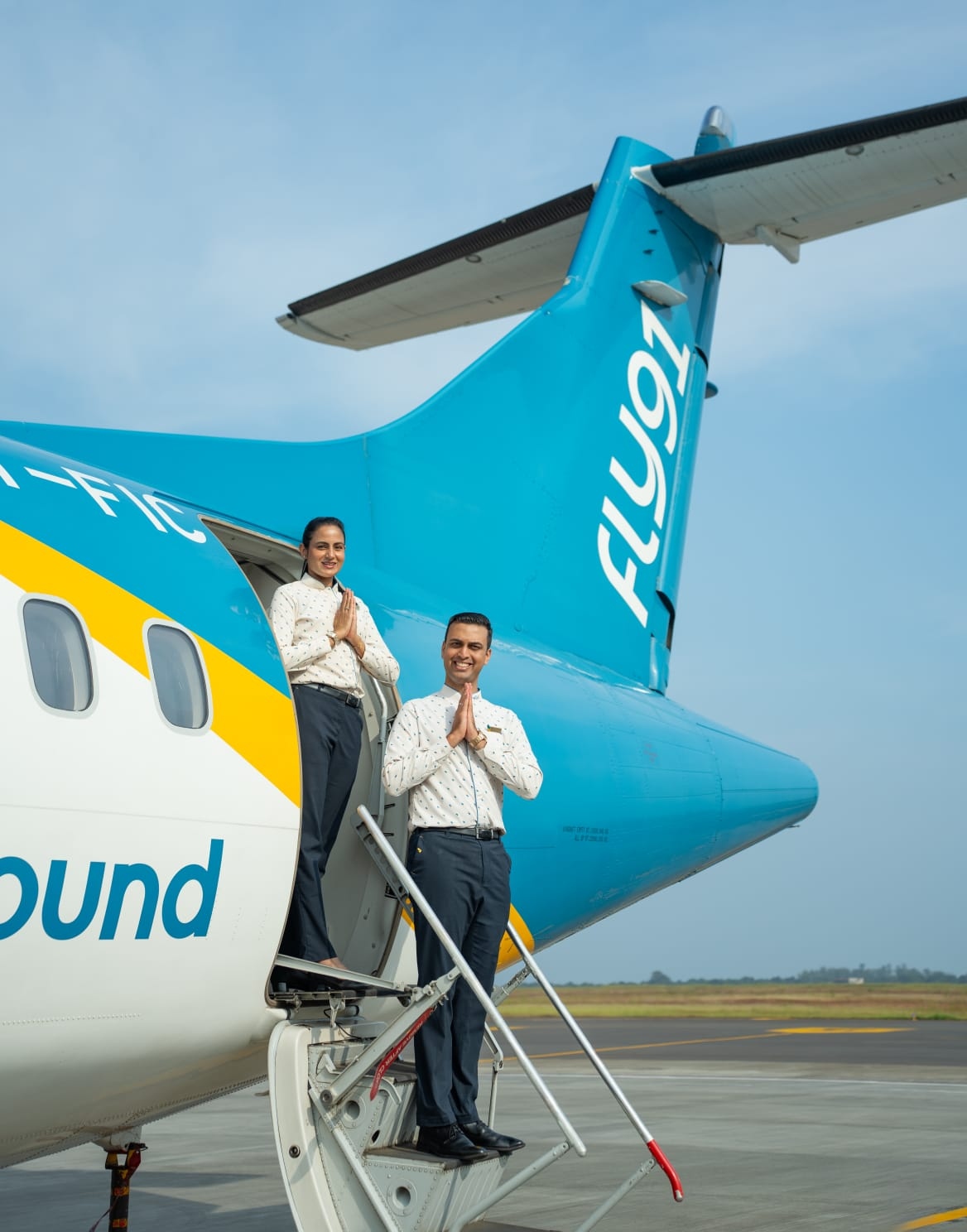
Every year, May 31 marks International
Flight Attendant Day, recognising those who keep flights running
smoothly behind the scenes. For many youngsters, it is also a
reminder that aviation is a career within reach. We look at how
Goa-based regional airline FLY91 trains cabin crew for a role that
demands far more than what passengers see onboard.
Panaji, May
2026 – Passengers often judge a flight attendant by what they see
onboard. But the role is shaped long before take-off.
At
Goa-headquartered regional airline FLY91, training begins well before
recruits step onto an aircraft. As the airline expands its short-haul
network to 12 destinations, including tier 2 and tier 3 regions and
urban hubs like Pune, Bengaluru and Hyderabad, the emphasis is on
preparing crew to handle people and situations in real time.
Gautam
Salaskar, FLY91’s Head of Ground Operations, Inflight and Customer
Service, says the airline prioritises attitude over appearance. “Our
crew represent the real Bharat and FLY91 ethos. We desire empathy and
kind nature over style and stature.†Candidates must be over 18 and
must have completed Class 12 and be comfortable speaking English and
Hindi. “Speak from your heart. Don’t give rehearsed answers. Tell
us your true story, and that's what will make you stand out.
Ultimately, at FLY91, we hire based on our values so we look for
humility. We seek crew who are grounded, patient and willing to
learn," Salaskar says.
Among those drawn to aviation is
Komal Manjit Matharu, who began her journey at 19. Now 29, she is a
Line Check Cabin Crew and Customer Service Trainer at FLY91. Her
interest began in childhood, when she travelled alone as an
unaccompanied minor and observed cabin crew interacting with
passengers.
For Matharu, the role of a flight attendant is
often misunderstood. “Most people think the role is only about
serving passengers or travelling, but after training and flying
experience, I understood that safety is actually the core
responsibility of cabin crew. We are trained to handle emergencies,
medical situations, passenger conflicts, and evacuation procedures,
which many people are not aware of,†she says.
That emphasis
shapes how crew are trained to handle pressure. “The first instance
that comes is actually panic. You actually get scared. But that is
where your training takes over and that is where you are tested as
cabin crew,†Komal adds.
And this preparation continues once
recruits begin flying.
Nainesh Kataria, a cabin crew member
at FLY91, says familiarity with aircraft systems and safety equipment
proved invaluable once he began flying. He adds that staying composed
is essential, as passengers often take their cues from the crew’s
behaviour. "In aviation, pressure situations can happen anytime,
so I try to stay calm and focus on procedures rather than emotions.
During training, we were taught that passengers observe the crew’s
behaviour first, so maintaining composure and communicating clearly
is very important. I rely on teamwork, SOPs, and situational
awareness to manage such situations effectively," according to
Nainesh.
Senior crew member Madhuri Reddy says repeated
drills make the biggest difference. “Many people assume cabin crew
are there to serve food and drinks, but safety is our primary
responsibility. We are trained to handle emergencies, medical
situations, security threats, and passenger management while ensuring
everyone feels comfortable during the flight,†she says, adding
that both male and female crew are trained equally to manage
difficult situations calmly and professionally.
Jennifer
Doctor, Manager for Quality and Standards, Products and Service at
FLY91, says, “The cabin crew training follows the airline’s SOAR
values (Safety & Simplicity, Operate with Frugality, Act with
Humility and Render Service with Integrity). Beginning with induction
and soft skills, the 45–60 day programme moves through safety,
service and supervised flights before solo operations.â€
After
service training and supervised flights, trainees are cleared for
solo flying. The 45–60 day programme also opens pathways into
leadership, training and management.
Their chores executed
mid-air are ultimately about making flyers comfortable enroute their
respective destinations. “The main part of this job is to take care
and give that warmth to people so that when they come on a flight,
they feel comfortable and they feel at home.â€